How to Wash Workwear: Practical Tips Every Professional Should Know

Your workwear is a vital part of your daily performance. It protects you from workplace hazards and maintains your professional image. However, learning how to wash workwear correctly is essential to keep these garments functional. Whether you deal with industrial grease or office dust, standard laundry habits often fall short. Specialised fabrics, such as flame-resistant materials or high-visibility strips, require specific care to remain effective.
Improper cleaning leads to more than just faded colours. It can compromise the safety features of your gear. This guide offers efficient tips on cleaning workwear to help you extend the life of your investment. By following these steps, you maintain the structural integrity of your clothes. You also save money by avoiding frequent replacements. Maintaining a sharp appearance starts with the right cleaning routine.
Let’s explore the best practices for handling your professional attire at home or through professional services. Knowing how to wash workwear ensures you stay safe and look your best every single day.
Why Proper Workwear Washing Matters
Proper maintenance prevents the buildup of hazardous chemicals, sweat, and salt. Over time, dirt acts like sandpaper on workwear fabrics. It grinds down the fibres and causes premature tearing at the seams. If you work in high-risk zones, clean clothes reflect light better and resist flames as intended. A clean uniform also boosts your confidence and professional reputation during client interactions. Neglecting these items causes them to lose their shape and protective qualities.
Always Check the Care Label First
The care label is your primary manual for garment longevity. Manufacturers design these instructions based on specific textile tests. Ignoring them often leads to shrinking or heat damage that cannot be reversed. One of the efficient tips for cleaning workwear is to read every tag to identify heat limits and chemical restrictions. Modern labels often include fibre percentages, which dictate how the fabric reacts to moisture.
Understanding these icons helps you choose the right settings for different workwear fabrics. These symbols provide a universal language for laundry safety that prevents costly mistakes.
Understanding Common Workwear Fabric Symbols
Look for the tub icon to see the maximum heat allowed. A tub with a single line beneath suggests a permanent-press cycle for synthetic blends. A triangle with a cross means you must avoid bleach at all costs to protect the fabric dye. An iron with three dots allows for high heat, while one dot requires a cool touch for silk or nylon. If you see a circle with a letter, that garment is intended for professional solvents only.
How Often Should You Wash Workwear?
The frequency depends on your job environment and the soil level. Heavy labour roles usually require a wash after every shift to remove salts and oils that degrade the elasticity. Office-based professionals might wear a blazer several times before cleaning to avoid excessive friction. Frequent washing can wear out fibres, so use your best judgment based on visible dirt and odours. If the garment is waterproof, over-washing can strip the protective outer coating.
Pre-Treating Stains for Best Results
Stains become permanent if they come into contact with the hot water in a washing machine first. Spot-cleaning helps break down bonds between the dirt and the fabric before the full cycle begins.
This step is crucial for grease, ink, or organic spills that settle deep into the weave. Acting fast prevents the stain from setting into the fibre core. Home-based solutions can be very effective if applied quickly. Using basic household items often keeps a garment out of the trash bin.
Safe Pre-Treatment Methods at Home
Apply a small amount of liquid soap directly to grease marks. Let it sit for twenty minutes before scrubbing lightly with a soft brush or cloth. For protein stains like blood or sweat, use cold water and a salt paste to lift the residue. Always test a small hidden area first to check for colour fading. Avoid rubbing too hard as this can create a fuzzy patch on the fabric surface.
Choosing the Right Detergent for Workwear
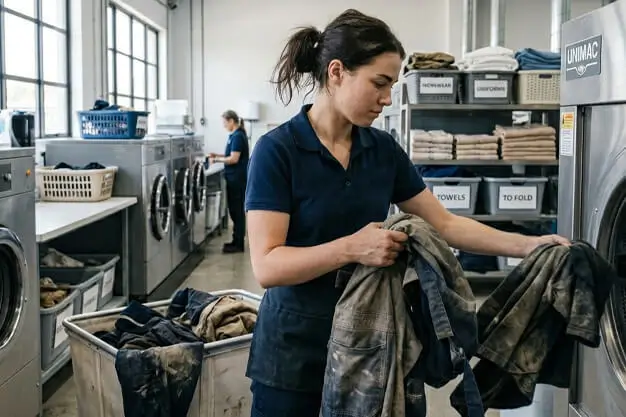
Your choice of cleaner impacts the durability of your gear. Check out our guide on powder vs. liquid laundry detergent to see which suits your needs. Liquid options usually dissolve better in cooler water and leave fewer streaks on dark uniforms. Avoid softeners, as they coat fibres and reduce the breathability of technical workwear fabrics. High-performance gear needs a detergent that rinses away completely without leaving a film.
Selecting the Correct Washing Temperature
Temperature plays a massive role in removing bacteria and stains. You must find the right water temperature for every laundry load to avoid damage. High heat kills germs but can melt synthetic elasticity in modern stretch fabrics. Cold water protects colours but might leave heavy oils behind in heavy-duty cotton. Always match the temperature to the heaviest soil level without exceeding the label limit.
Sometimes, heat is the enemy of specialised textile technology. Modern machines make cooler cycles much more effective than they used to be.
When Low-Temperature Washing Is Better
Use cold cycles for dark colours to prevent bleeding and fading. Low temperatures are also best for delicate items or clothes with plastic screen prints and vinyl logos. This approach saves energy and keeps the fit of your trousers consistent over time. Cold water is also better for preserving the stretch in spandex-blend work pants, making it an effective technique for how to wash workwear.
Drying Workwear the Right Way
Heat from a dryer is the leading cause of garment shrinkage and elastic failure. Air drying is the safest method for most professional gear. If you must use a machine, select a low-heat setting and remove the clothes while slightly damp. Hanging workwear indoors in a well-ventilated room prevents sun damage while drying the fabric evenly. Avoid hanging heavy sweaters as they can stretch out of shape.
Ironing and Finishing for a Professional Look
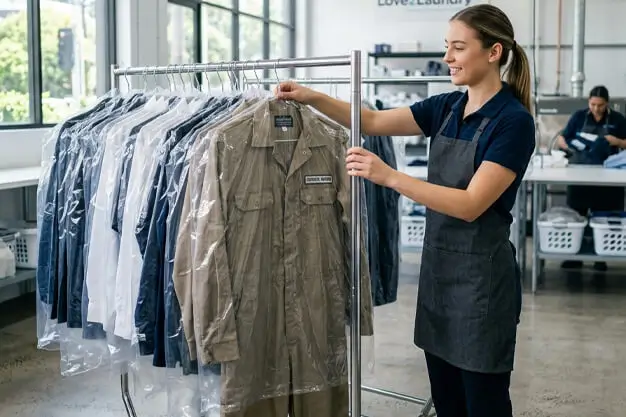
A crisp finish tells clients you pay attention to detail. Iron your shirts while they are slightly damp to remove stubborn wrinkles easily. For suits or heavy jackets, use a steamer to refresh the look without direct heat. This keeps the fabric looking new and professional for a longer period. Always iron on the reverse side for printed or embroidered logos.
How to Maintain Workwear Between Washes
You can extend the time between loads with simple habits. Brush off dry mud or dust immediately after your shift using a stiff brush. Use garment bags to store seasonal items like heavy winter coats or formal suits.
This keeps dust and moths away from your expensive gear while it sits in the closet. Hanging items properly prevents deep creases that require harsh ironing later. If you encounter challenges during the washing process, consider workwear laundry services.
When to Choose Professional Laundry and Dry Cleaning
Some stains and fabrics are too tough for home machines. If you deal with heavy industrial chemicals, home washing might contaminate your family’s clothes. Professional workwear laundry services have the industrial equipment needed for deep cleaning. They use specialised extractors that remove more water and dirt than a domestic unit.
Expert cleaners offer specialised care that a standard home setup cannot match. This is often the best choice for delicate or highly soiled uniforms that require starch or pressing.
Benefits of Professional Workwear Cleaning Services
Professionals use controlled chemical processes to remove deep grime without damaging the base fabric. They offer consistent results and save you hours of labour every week. Many businesses also provide repairs and button replacements as part of their service. This ensures your uniform is always ready for a high-stakes meeting.
Common Workwear Washing Mistakes to Avoid
Many people ruin their gear by taking shortcuts during cleaning. These errors are easy to fix and make a perfect procedure for how to wash workwear.
- Overloading the machine, which prevents proper rinsing and cleaning.
- Using too much detergent leads to itchy residue and stiff fabric.
- Choosing heavy-duty washing cycles for delicate office wear or thin polos.
- Mixing light and dark colours in the same load can cause greying.
- Leaving wet clothes in the machine, which leads to mildew smells.
Knowing When It’s Time to Replace Workwear
No garment lasts forever, regardless of how well you clean it. Replace your gear if you notice frayed edges or thinning spots in high-friction areas, such as the inner thighs. For safety gear, check whether the reflective strips have lost their shine or are starting to peel. Once the protective properties fade, the clothing is no longer fit for the job. Wearing worn-out gear can give your clients the impression that you are unprofessional.
FAQs – How to Wash Workwear
How should you wash work clothes?
The best way for how to wash workwear is to separate your items by colour and fabric type before using a gentle detergent. Turn garments inside out to protect buttons and logos from damage during the cycle.
What is the best wash cycle for work clothes?
A permanent press cycle works best for most items to reduce wrinkling. Use a heavy cycle only for durable canvas or denim that has thick mud.
How to get the smell out of a mechanic’s clothes?
Pre-soak the garments in a mix of water and white vinegar to neutralise oil odours. Avoid high dryer heat, which can bake any remaining smells into the fabric.
Workwear Wrapped Up: Clean Clothes, Confident Professionals
Mastering workwear is a skill that pays off in the long run. By using efficient tips on cleaning workwear, you keep your professional image sharp. Remember to balance home care with professional workwear laundry services when necessary. High-quality maintenance preserves the safety and comfort of your daily uniform. If you are a business owner, look into our laundry services for landscapers for bulk cleaning solutions. Check our pricing for regular maintenance plans. For specific questions about your fabric types, please contact us today. Taking care of your clothes means they will take care of you on the job. Consistency is the key to longevity. Start applying these methods today to see an immediate difference in your gear. Knowing how to wash workwear makes every workday a little bit better.