Washing Microfibre Towels: 10 Best Detergents That Keep Them Fluffy, Fresh & Lint-Free

When it comes to washing microfibre towels, many people assume a standard cycle with heavy soap is the answer. In reality, these unique fabrics require a delicate touch to maintain their magnetic-like ability to grab dust and moisture.
If you use the wrong products, you risk clogging the tiny loops that make these cloths so effective. Choosing the right detergent helps preserve their absorbency and prevents the fibres from becoming stiff or matted over time.
While home care is vital, professional Laundry and Dry Cleaning services often provide the deepest clean for high-performance textiles. By understanding the science of microfibre towel care, you can keep your cleaning arsenal in top shape for years.
Why Microfibre Towels Need Special Washing Care
Washing microfibre towels is different from cleaning cotton because of how the material is constructed. These cloths are made of millions of tiny synthetic hooks that trap dirt, oils, and bacteria deep within their structure. Regular fabrics tend to shed debris easily, but microfibre holds onto it like a magnet. This means that if you use an improper method, you might lock that grime inside the towel forever.
If you don’t follow the right steps when washing microfibre cloths, the fibres can become matted. Improper washing methods, such as high heat or heavy detergents, significantly reduce absorbency. You might notice your towels start to push water around rather than soaking it up. This leads to a stiff, scratchy texture and annoying lint buildup that ruins a streak-free finish on glass or car paint.
How Detergent Choice Affects Microfibre Performance
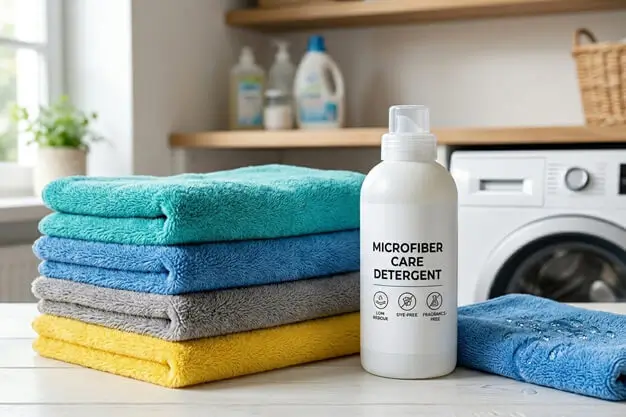
The chemistry of your soap plays a massive role in the lifespan of your microfibre cloths. Harsh chemicals found in standard detergents can be too aggressive for the fine polyester and polyamide strands. These chemicals often break down the “split” nature of the fibre, which is what gives the cloth its cleaning power.
Furthermore, many household soaps contain fabric softeners and heavy fragrances. These additives work by coating the fibres in a thin layer of wax or oil. For a normal t-shirt, this feels soft. For microfibre, it is a disaster.
This coating glues the tiny fibres together, essentially “blinding” the towel and making it repel water. Using the best microfibre towel detergent keeps these fibres open and fluffy, allowing them to perform at their peak.
What to Look for in a Detergent for Microfibre Towels
Selecting the right product is the first step toward better microfibre towel care. You should prioritise mild, residue-free detergents that lift dirt without adding unnecessary bulk. Look for formulas labelled as low-suds, dye-free, or fragrance-free. These are generally much safer for the intricate weave of a high-quality cloth.
Low-Residue Formula
Microfibre needs a detergent that rinses out fully every single time. If a soap leaves behind a film, the towel becomes hydrophobic. Instead of absorbing spills, the cloth will simply slide over them. A low-residue formula ensures that every rinse cycle effectively flushes away lifted dirt and soap, leaving nothing behind but clean fabric.
No Fabric Softeners or Fillers
You must avoid detergents with built-in softeners or fillers. These ingredients are designed to stay behind in the fabric to make it feel “fresh.” However, these fillers fill the microscopic gaps in your towels. This makes them significantly less effective at trapping dust. It is often the most affordable way to clean your microfibre towels: simply avoid these expensive, damaging additives.
Gentle Cleaning Agents
Stick to detergents without bleach or strong enzymes that are too caustic. These agents can chemically burn the synthetic strands, leading to premature fraying. Gentle cleaning agents maintain the original texture and vibrant colour of your clothes. This ensures they stay soft enough for delicate surfaces like camera lenses or car interiors.
10 Best Detergents for Washing Microfibre Towels
The following best detergents for cleaning microfibre cloths have been selected based on their ability to rinse clean and protect fibre integrity. Your choice should always align with your local water hardness and the extent to which you use your towels.
1 – Mild Liquid Detergent for Sensitive Fabrics
Liquid detergents for sensitive skin are often the best detergents for cleaning microfibre cloths because they lack dyes and perfumes. They clean deep into the weave without leaving irritating buildup. These are perfect for general household use where you want a safe, effective clean for your microfibre cloths.
2 – Plant-Based Laundry Detergent
Plant-based formulas offer a natural way to tackle dirt without relying on heavy petroleum-based chemicals. These eco-friendly laundry detergents are excellent at protecting the natural softness of synthetic fibres. They provide a thorough clean that is gentle on both the fabric and the environment.
3 – Non-Bio Liquid Detergent
Non-bio detergents do not contain the biological enzymes that can sometimes be too harsh for synthetic blends. They are highly effective for frequent washing of microfibre towels, as they reduce the risk of fibre damage. This keeps your towels working like new even after dozens of trips through the laundry.
4 – Sports or Activewear Detergent
Activewear detergents are specifically engineered to strip away body oils and synthetic-bonding sweat. Since microfibre is also a synthetic material that traps oil, these soaps work wonders. They are ideal for heavily used cloths used in gyms or for heavy-duty household scrubbing.
5 – Eco-Friendly Concentrated Detergent
A concentrated, eco-friendly laundry detergent option lets you use a very small dose for big results. Because you use less product, there is a much lower risk of soap residue staying trapped in the fibres. It is a smart, sustainable choice for maintaining high-performance cleaning rags.
6 – Fragrance-Free Detergent
Fragrance-free options are vital because they remove the oils that create scents. Odours in microfibre are usually caused by bacteria trapped in the weave. A fragrance-free soap helps address the source of the smell by thoroughly cleaning the fibres, rather than masking it with a perfume that could clog the towel.
7 – Professional-Grade Laundry Detergent
Professional-grade formulas are often the best microfibre towel detergents for those who want commercial-grade results. These are designed for delicate but high-use fibres, ensuring the towels last through hundreds of cycles. They provide the consistency needed for high-end detailing or professional cleaning businesses.
8 – Baby Laundry Detergent
Baby detergents are famously gentle and free from the most common irritants. This makes them a surprisingly good fit for delicate microfibre textures. If you have towels used for facial care or ultra-sensitive surfaces, a baby-safe soap is a great, mild option.
9 – Enzyme-Light Detergent
While some enzymes are harsh, an enzyme-light formula can help break down organic stains without eating away at the polyester. This balance helps keep towels fluffy while ensuring that stubborn food or dirt spots are actually removed during the wash.
10 – Microfibre-Specific Detergent
There are products specifically designed for this fabric, such as “Rags to Riches” or Chemical Guys Microfibre Wash. These are engineered to open the fibres, release trapped wax, and polish. If you are serious about car detailing, these specialised cleaners are the gold standard.
Detergents and Products to Avoid for Microfibre Towels
To keep your towels in peak condition, you must avoid certain common laundry staples. Never use the fabric softener of any kind on your microfibre; it will instantly ruin its absorbency. Bleach is another enemy, as it weakens the polyamide and causes the towels to fall apart.
You should also avoid powdered detergents. Unlike liquid, powder can fail to dissolve completely in the cool or warm water used for microfibre. The undissolved granules get stuck in the tiny fibres, acting like sandpaper the next time you use the towel. This leads to scratches on delicate surfaces and a general loss of softness.
How Much Detergent Should You Use for Microfibre Towels
When washing microfibre towels, less is almost always more. These cloths are designed to release dirt easily when agitated in water. Using a full cap of detergent is a common mistake. Most loads require only about 1 or 2 teaspoons of high-quality liquid soap.
Using too much detergent leads to a massive buildup of suds that the machine cannot fully rinse away. If you pull a towel out and it feels slimy or “heavy,” you have used too much. This excess soap remains in the fibres, attracting more dirt the next time you clean. Reducing your dose is an affordable way to clean your microfibre towels while actually improving their performance.
Correct Washing Method for Microfibre Towels
The best way to handle washing microfibre cloths is to keep them isolated. Always wash them in their own load. If you mix them with cotton towels, the microfibre will act like a magnet, pulling all the lint off the cotton towels. You will end up with “hairy” microfibre cloths that leave streaks everywhere.
Use cool or warm water—never hot. High temperatures can melt the tiny plastic fibres, causing them to fuse. Choose a gentle or delicate cycle to prevent unnecessary wear and tear. If your towels are extra dirty, a pre-soak in warm water with a little detergent is better than a harsh, high-speed wash.
Drying Microfibre Towels Without Ruining Them
Heat is the biggest threat during the drying process. High heat in a dryer can shrivel the “hooks” on the microfibre, turning a soft towel into a scratchy rag. The safest method is to air-dry them on a rack. If you must use a machine, use the lowest heat setting or an “air fluff” cycle.
Never use dryer sheets. Just like liquid softeners, dryer sheets coat the fibres in a waxy film that kills absorbency. Ensure the lint trap is completely clean before you start, so no stray cotton fibres find their way onto your clean microfibre.
Signs You Are Using the Wrong Detergent
How do you know if your microfibre towel care routine is failing? Look for these red flags:
- Stiffness: The towels feel crunchy or rough instead of soft.
- Poor Absorption: Water beads up on the towel’s surface rather than soaking in.
- Bad Odours: A “sour” smell persists even after the towels are dry.
- Linting: The towels leave small specks of fibre behind on glass or mirrors.
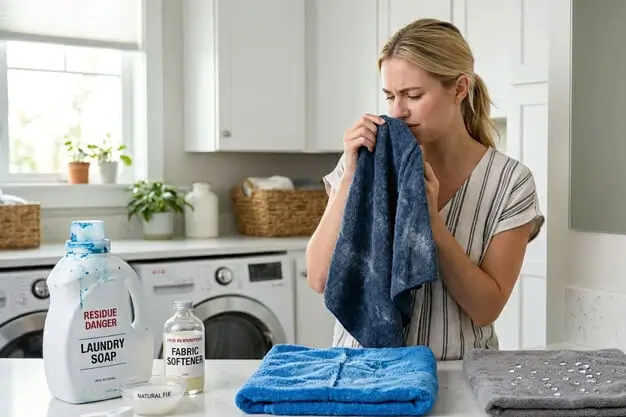
These symptoms usually indicate a layer of detergent or softener residue coating the fibres. You may need to strip them by washing with a little white vinegar to restore their original state.
Professional Laundry and Dry Cleaning for Microfibre Towels
For those who use high-end microfibre for professional detailing or large-scale cleaning, home machines might not be enough. Professional Laundry and Dry Cleaning services use industrial-grade equipment that ensures a completely residue-free finish. They can control water temperature and detergent dosage with extreme precision.
Commercial machines also provide better agitation and rinsing than most home units. This means even the deepest trapped oils and waxes are removed without damaging the delicate synthetic structure. If you want to maximise the lifespan of your expensive towels, periodic professional cleaning is a wise investment.
How Love2Laundry Netherlands Keeps Microfibre Towels Fluffy and Fresh
At Love2Laundry Netherlands, we understand the technical requirements of high-performance fabrics. Our Laundry and Dry Cleaning service uses specialised, fabric-safe detergents free of the harmful fillers found in grocery store brands. We handle every load with a focus on hygiene and fibre preservation.
Our experts ensure that your microfibre is never mixed with lint-shedding fabrics. We use calibrated drying temperatures to keep the fibres from melting, ensuring your towels come back as fluffy as the day you bought them. Whether it’s for your home or your business, our consistent results save you time and protect your investment.
Common Mistakes to Avoid When Washing Microfibre Towels
The most frequent error is the powder vs. liquid laundry detergent debate; always choose liquid. Powdered soaps are far more likely to leave abrasive residues behind. Another mistake is using hot water, which permanently damages the synthetic strands.
Choosing the best detergents for cleaning microfibre cloths requires finding a formula that effectively breaks down oils without leaving behind any waxy residues. This ensures that the microscopic fibres remain open and ready to trap dust during your next big cleaning task.
Finally, never skip the “wash before first use” rule. New towels often have factory dust or excess dye that can affect performance. By avoiding these common pitfalls and checking our pricing, you can ensure your cleaning cloths stay effective for years. If you have specific questions about bulk care, feel free to contact us for expert advice.
FAQs – Washing Microfibre Towels
What is the best thing to wash microfibre towels in?
The best option is a dedicated liquid detergent for synthetic fabrics or a clear, fragrance-free soap. These products ensure no oily residues or perfumes clog the microscopic fibres of the cloth.
What should you avoid when washing microfibre?
You must strictly avoid fabric softeners, bleach, and high-heat drying cycles. Additionally, never wash them with cotton materials to prevent lint from transferring into the microfibre weave.
Can I use normal detergent for microfibre?
Yes, as long as the detergent is liquid and free from softeners, scents, or dyes. However, using a specialised formula often provides a much deeper clean for heavily soiled detailing towels.
Conclusion: Keep Your Microfibre Towels Soft, Clean, and Lint-Free
Mastering the art of washing microfibre towels is the secret to a cleaner home and a better-maintained vehicle. By choosing the right detergents and avoiding heat and softeners, you protect the intricate “split” fibres that do all the hard work.
Remember that the best microfibre cloths are an investment in efficiency; treating them with care ensures they continue to trap dust and absorb moisture like a pro.
Whether you are looking for an affordable way to clean your microfibre towels at home or need a deeper, commercial-grade solution, consistency is key. Proper washing of microfibre towels prevents the buildup that leads to streaks and odours.
For those who want the ultimate peace of mind and perfectly fresh results, consider relying on Love2Laundry’s Laundry and Dry Cleaning service for consistent microfibre care and long-lasting performance.